SEASONS
Longer beats newer
WRAP says extending the life of clothing by just nine months can cut its carbon, water and waste footprints by up to 20%.
Try a garment doodlecatwalk
WHAT THE FIGURES SAY
New seasons come round fast. Clothes can last much longer.
Try a garment
WEAR ITone season more
UK and European research keeps landing on the same point: the clothes with the smallest footprint are usually the ones already hanging in the wardrobe, worn again and again.
Updated
THE SHORT ANSWER
Fashion's footprint is made mostly before we buy.
Each extra month of wear spreads it further.
SEASONS
WRAP says extending the life of clothing by just nine months can cut its carbon, water and waste footprints by up to 20%.
Try a garmentREPAIR
Shoppers expect up to 50 washes from their clothes, WRAP found, while current durability tests ask for only 15 to 20 wash cycles.
Four habitsWARDROBE
WRAP's UK research found around 30% of clothing in the average wardrobe had not been worn for at least a year.
See the numbersA QUICK GARMENT CHECK
Pick what you might do with a piece of clothing to see what the research says. The bar shows how much the choice keeps the garment in use.
Figures from WRAP's UK research (2012 and 2025) and the House of Commons Environmental Audit Committee (2019). General information only.
TWO NUMBERS WORTH KNOWING
One figure on how much we buy,
one on how little comes back as new clothes.
19kg
Textiles bought per EU citizen, 2022
The European Environment Agency says the average EU citizen bought 19 kg of clothing, footwear and household textiles in 2022, up from 17 kg in 2019.
BUYING · EEA
< 1%
Clothing material recycled into new clothing
The Environmental Audit Committee reported in 2019 that less than 1% of material used to produce clothing is recycled into new clothing at the end of its life.
RECYCLING · UK PARLIAMENT
WRAP estimates that 711,000 tonnes of post-consumer textiles are discarded in general waste in the UK each year, and that the fashion and textiles industry accounts for 8–10% of global greenhouse gas emissions.
FOUR HABITS TO TRY
None of these needs new clothes. They are about getting more wear from the ones you already own.
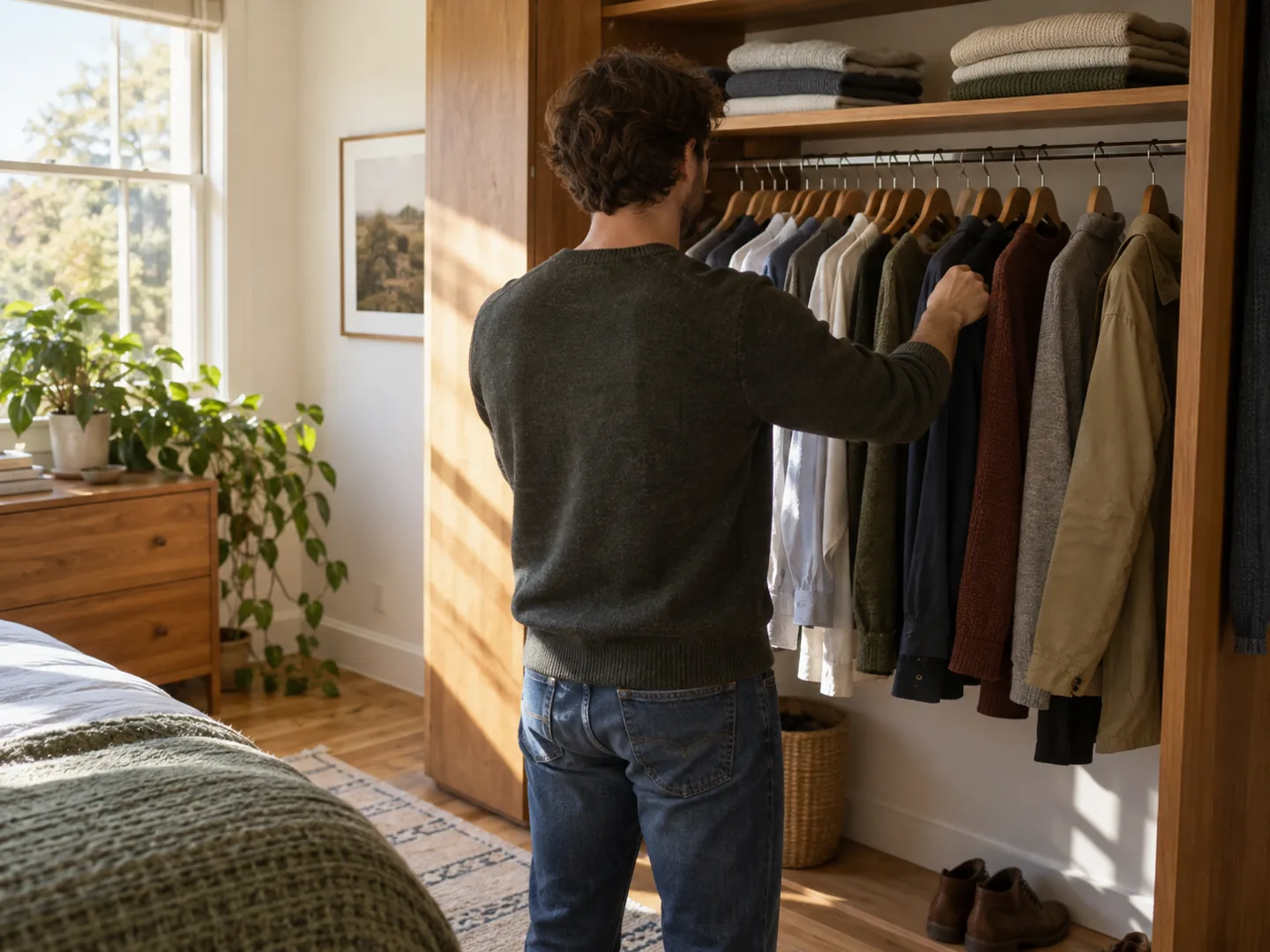
Before buying, look for the pieces you have not worn in a year and try them in a new combination.
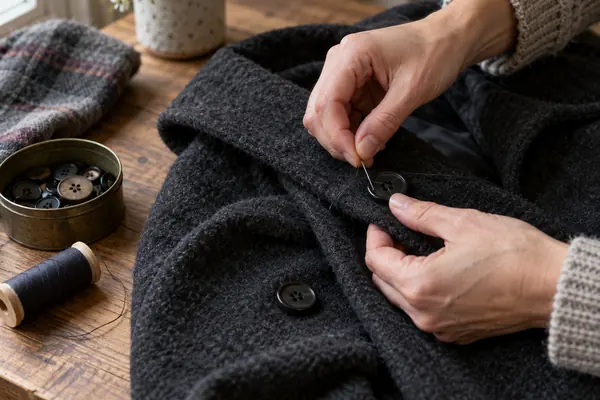
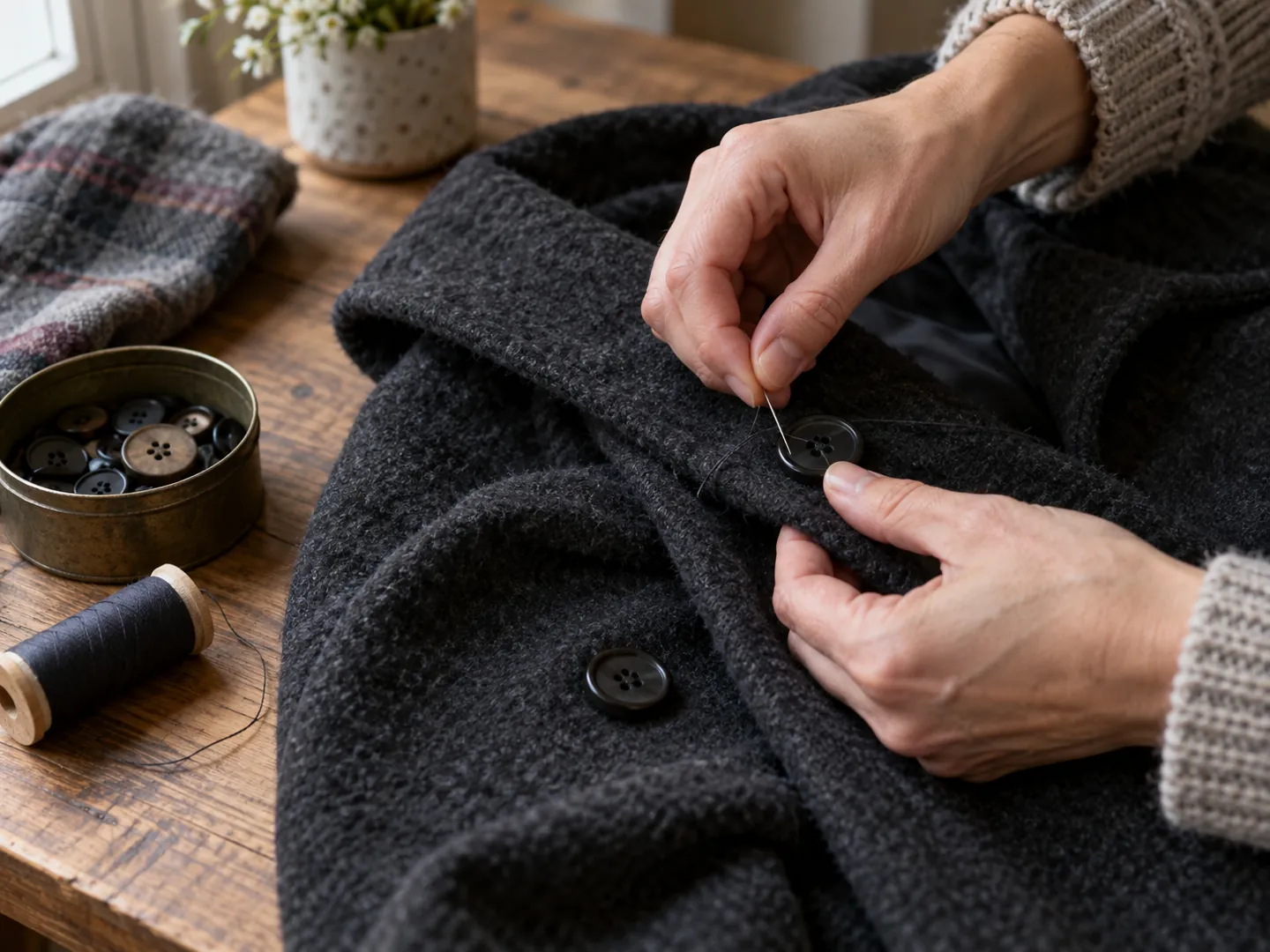
Sew back a loose button or redo a dropped hem, so a favourite stays in the rotation instead of the bin.
Follow the care label on each garment, and only wash what actually needs it.
If it no longer suits you, give, swap or sell it so someone else keeps wearing it.
THE BIGGER PICTURE
WRAP says the fashion and textiles industry uses 93 billion cubic metres of water each year. The European Environment Agency ranks textiles, on average, fifth among 12 categories of household consumption for environmental and climate pressures.
In 2022 the EU generated about 6.94 million tonnes of textile waste, around 16 kg per person, and 85% of household textile waste was not collected separately, according to the EEA.
Questions
WRAP says extending the life of clothing by just nine months can reduce its carbon, water and waste footprints by up to 20%. Its 2012 research put three extra months of active use at a 5–10% reduction.
WRAP's 2012 UK research found that around 30% of clothing in the average wardrobe had not been worn for at least a year.
WRAP reports that people expect up to 50 washes from their clothes, while current durability testing thresholds ask clothing to withstand no more than 15–20 wash cycles.
The Environmental Audit Committee reported around 300,000 tonnes of textile waste in household black bins every year. WRAP's Textiles 2030 page gives 711,000 tonnes of post-consumer textiles discarded in general waste annually.
Rarely. The Environmental Audit Committee reported in 2019 that less than 1% of material used to produce clothing is recycled into new clothing at the end of its life.
ABOUT THIS NAME
doodlecatwalk.com is part of the DoodleSale portfolio. It isn't in an auction right now, but you can ask about leasing it.